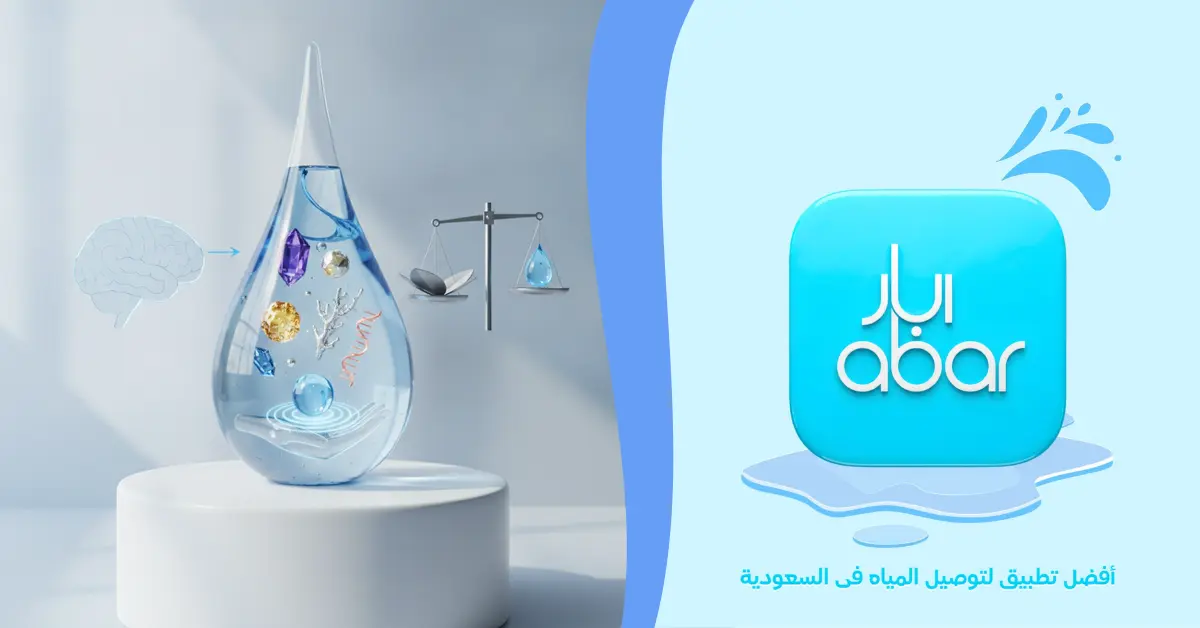
What minerals mineral water contains, how it differs from regular water, and how to choose it wisely via Abar.
Mineral Water: What Minerals It Contains and How to Choose It Wisely
Water is an essential part of daily life. It helps the body function normally and supports hydration and energy. With so many types of water available in the market, many people may wonder what mineral water means, what makes it different from regular water, and how to choose it wisely in a way that suits the body’s needs.
Choosing water is not only about taste or bottle design. It is also related to the water source, its level of purity, and the mineral content it contains. That is why understanding the components of mineral water helps you make a better decision when buying water bottles or when you order water online for home or work.
First: What Is Mineral Water?
Definition of Mineral Water
Mineral water is water that naturally contains a group of dissolved minerals, usually gained as it passes through layers of rock and soil. The amount of these minerals varies from one source to another, which is why you may notice differences in taste or texture between one type of bottled water and another.
The presence of minerals does not mean that every mineral water is equally suitable for everyone. It depends on the type and amount of minerals. Some waters are low in minerals and easy to drink every day, while others contain higher levels that may suit specific needs or preferences.
Why Do People Care About It?
Many people are interested in mineral water because they associate it with purity, quality, and a balanced taste. The presence of water minerals such as calcium, magnesium, sodium, and potassium may also give water different qualities in terms of flavor and daily use.
As awareness of better general health increases, choosing water has become part of a healthy lifestyle, especially for those who make sure to drink enough water every day instead of sweetened or high-calorie drinks.
Second: What Minerals Can Mineral Water Contain?
Calcium
Calcium is a well-known mineral for its role in supporting healthy bones and teeth. Mineral water may contain varying amounts of calcium depending on the natural source of the water. Its presence may also affect the taste of the water and give it a different feel when drinking.
Water should not be relied on as the main source of calcium, but it can be a helpful part of a balanced diet. That is why it is useful to read the bottle information to know how much calcium is present in each liter.
Magnesium
Magnesium is an important mineral for the body and is involved in many vital functions. Some types of mineral water may contain a certain amount of it, and it may help give the water a more noticeable taste compared with low-mineral water.
When choosing water, it is better to pay attention to the balance of minerals rather than focusing on only one mineral. Good water for daily drinking combines purity, an acceptable taste, and a suitable mineral level.
Sodium
Sodium is one of the minerals you should pay attention to when reading a water label, especially for people who monitor the amount of salt in their diet. Some types of water may be low in sodium, while others may contain higher levels.
If a person follows a low-sodium diet, it is better to choose water with a low sodium level. This makes reading the information on water bottles an important step before buying.
Potassium and Other Minerals
Mineral water may also contain small amounts of potassium, bicarbonates, or other minerals depending on the nature of the source. These elements vary from one brand to another and are not always present in the same proportion.
What matters is that the water is safe, pure, and compliant with standards, and that the mineral content is clear to consumers so they can make a suitable decision when choosing water.
Third: The Difference Between Mineral Water and Regular Water
Source and Formation
The difference between mineral water and regular water often appears in the source and components. Mineral water usually comes from natural sources that contain dissolved minerals in specific proportions, while regular water may go through different treatment and purification processes before being bottled or used.
This does not mean that regular water is not good. The most important standard is safety, purity, and compliance with health specifications. However, mineral water is usually distinguished by its clear mineral content and its connection to a specific source.
Taste and Drinking Experience
Some people may notice that mineral water has a slightly different taste because of the minerals it contains. As water minerals and their levels vary, the taste of water can range from light and balanced to more pronounced.
Low-mineral water may taste lighter, and some people prefer it when they want simple water that is easy to drink throughout the day. So the choice here depends on personal needs and daily taste.
Daily Use
Mineral water can be used for daily drinking if it suits the body and meets standards. Other types of pure water can also be used for drinking, cooking, and preparing beverages. What matters is choosing pure water from a trusted source.
When buying bottled water in quantities for the home or office, you should pay attention to the production and expiry dates, the safety of the bottle, and the storage method, because water quality is not only linked to the source but also to how it is stored.
Fourth: How Do You Read a Water Bottle Label Wisely?
Check the Mineral Content
When reading the bottle label, look for a table that shows the mineral content, such as calcium, magnesium, sodium, and potassium. This information helps you understand the nature of the water and whether it is low, medium, or high in minerals.
If you drink large amounts of water every day, choosing water with balanced minerals may be more suitable for many people. But if you have a specific health condition, it is better to follow your doctor’s guidance on the most suitable type of water.
Pay Attention to Total Dissolved Solids
You may find a number on the bottle that refers to total dissolved salts or total dissolved solids. This number gives a general idea of the amount of minerals in the water. A higher number does not always mean the water is better, and a lower number does not always mean it is lower in quality.
The most important standard is that the water is suitable for drinking, has an acceptable taste, and comes from a trusted source. So do not make one number the only factor in your decision. Look at the full picture.
Check the Safety of the Bottle
Before buying or receiving water bottles, make sure the bottle is properly sealed and not damaged, swollen, or exposed to heat for a long time. Good storage maintains water quality and makes it safer to use.
It is also best to store water in a cool, dry place away from direct sunlight, especially in hot weather. This simple step is important for maintaining the quality and taste of the water.
Fifth: How Do You Choose Healthy Water That Suits You?
Identify Your Daily Need
Before buying water, ask yourself how you will use it: do you need it only for daily drinking, for the whole home, or for the office or rest house? Defining the use helps you choose the right bottle size and water type without waste.
If you are looking for healthy water for daily use, choose pure water with a pleasant taste and clear mineral content. Remember that drinking water regularly is more important than searching for a complicated type that does not fit your routine.
Choose a Trusted Source
A trusted source is an important factor when you order water for home or work. Choosing a provider that cares about water quality and safe delivery helps you get pure water in a convenient and organized way.
With the availability of digital services in Saudi Arabia, ordering water online has become an easy option for many families and businesses. This method can save time and help you get water without searching or traveling.
Balance Quality and Convenience
Quality matters, but convenience in ordering and receiving water matters too. That is why it is best to choose a service that provides pure water, offers clear options, and provides a delivery service suitable for your location and needs.
When relying on a trusted app like Abar, getting water becomes easier, whether you need quantities for the home or office. What matters is that the decision is based on purity, clarity, and easy access to water when needed.
Sixth: Tips for Maintaining Water Quality After Purchase
Store It in a Suitable Place
Even if the water is high quality, improper storage can affect its taste and quality. So make sure to keep bottles away from sunlight, heat, and materials with strong odors.
Do not leave water inside the car for long periods, especially during the day, because heat may affect the bottle and the water. Proper storage keeps pure water suitable for drinking with a better taste.
Use Bottles Safely
After opening a bottle, it is best to use it within a suitable time and close it tightly if you have not finished it. You should also avoid drinking directly from large shared bottles to keep them clean.
If you use water coolers or dispensers, they should be cleaned regularly so impurities or odors do not build up. Taking care of the tools is just as important as the quality of the water itself.
Conclusion
Knowing the components of mineral water and understanding the difference between mineral water and regular water helps you make a better decision when buying or ordering water. Water is not just a bottle you drink from. It is a daily choice that affects comfort, hydration, and a healthy lifestyle.
Read the bottle label, pay attention to water minerals, sodium levels, and total dissolved solids, and choose pure water from a trusted source. When you need to order water easily within Saudi Arabia, the Abar app offers a trusted option for getting pure drinking water with a convenient delivery service that suits the needs of homes and workplaces.
Read More Blogs



We excel in custom mobile app development through the synergy of expert teams and efficient processes.


