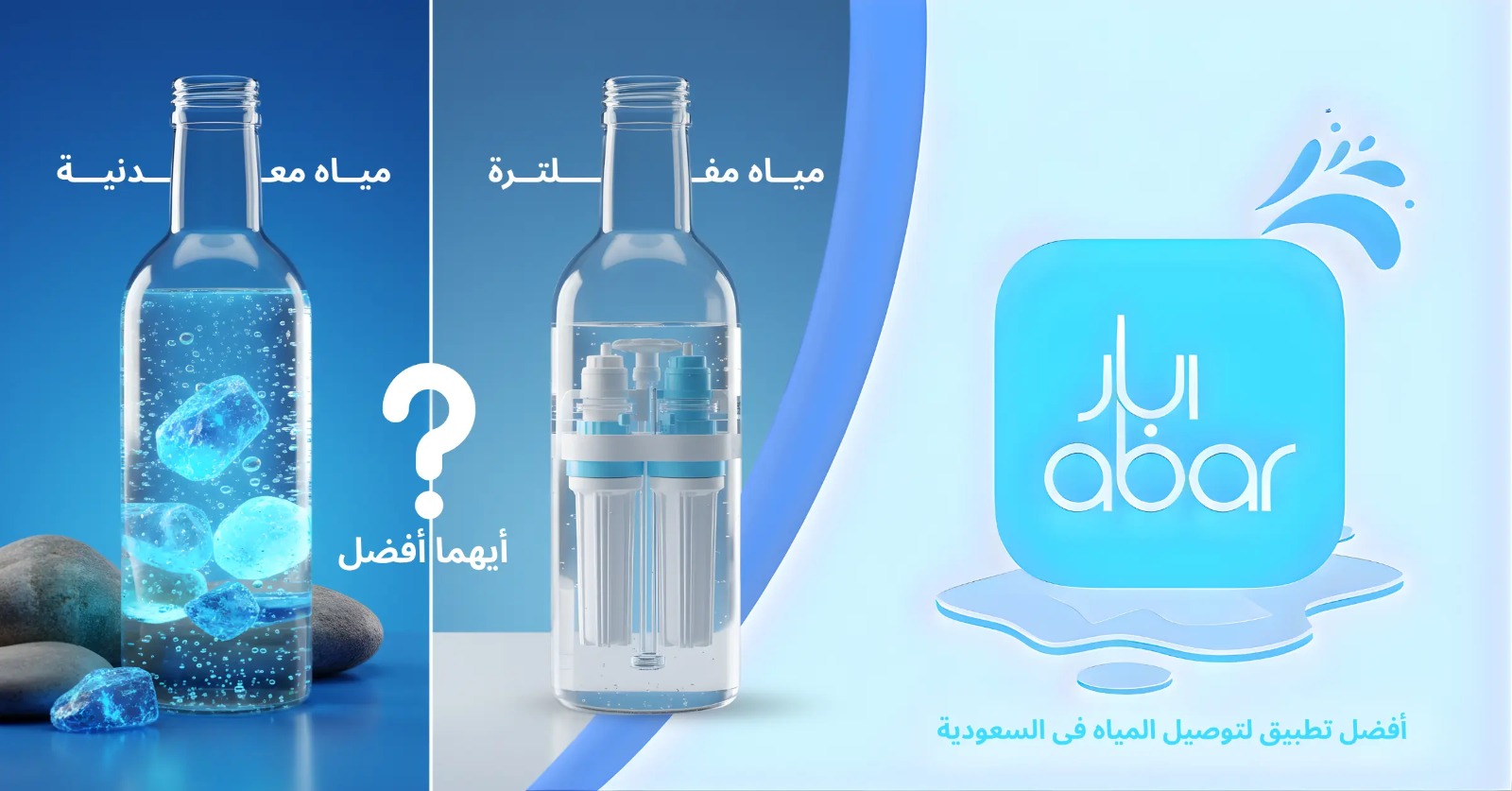
The Difference Between Mineral Water and Filtered Water | Which Is Better for Drinking in Saudi Arabia 2026
Choosing drinking water is no longer just a matter of taste or price. It has become an important health decision that directly affects blood pressure, kidney function, heart health, and daily hydration levels. With the wide variety of options available in the Saudi market—between mineral water and filtered water—one key question is increasingly asked:
Which is better: mineral water or filtered water?
In this comprehensive 2026 guide, we compare both types in terms of nutritional value, sodium and mineral content, health benefits, potential drawbacks, daily use suitability, and the best drinking water options in Saudi Arabia, while providing scientifically accurate answers to common questions such as: Is mineral water beneficial? Does filtered water remove salts?
Why Is Choosing Drinking Water No Longer a Simple Decision?
In recent years, water has gone from being a neutral element of daily life to a factor that directly affects heart health, blood pressure, kidney function, mineral balance, and overall quality of life. With the growing availability of both mineral water and filtered water in Saudi Arabia, consumers are often left confused: Which option should they choose? Which is better for everyday use? Is mineral water truly beneficial, or is filtered water the safer option? This comprehensive 2026 health guide provides clear, science-based answers built on water quality, sodium levels, and the benefits of each type, helping you make an informed decision that suits both you and your family.
What Is Mineral Water and Why Is It Different?
Mineral water is natural water that originates from protected underground sources and passes through mineral-rich rock layers, giving it a natural composition that includes minerals and salts such as calcium, magnesium, potassium, and sodium. These minerals are not added artificially; they are naturally present. Mineral water is strictly regulated after extraction before bottling. This is where the concept of mineral salts becomes important—beneficial when consumed in moderation, but potentially harmful when levels are high, especially sodium, which is a key concern for many consumers in Saudi Arabia.
Is Mineral Water Really Beneficial for Health?
When the right type is chosen, the answer is clearly yes. Mineral water helps maintain mineral balance in the body, supporting stronger bones, improved muscle function, and a healthy nervous system. The presence of magnesium and potassium also improves hydration efficiency compared to demineralized water. For this reason, many athletes and people with active lifestyles rely on mineral water for daily hydration. However, not all mineral waters are the same—some contain high sodium levels, making them unsuitable for daily consumption or for individuals with hypertension or kidney disease. This highlights the importance of choosing low-sodium mineral water.
What Are the Healthiest Types of Mineral Water?
When searching for the best mineral water, the brand name alone is not enough—the mineral content matters most. Healthy mineral water combines balanced minerals with low sodium levels, ideally not exceeding 20 mg of sodium per liter for daily consumption. This type of water provides health benefits without causing fluid retention or elevated blood pressure, making it the optimal choice for long-term daily use. As a result, many consumers now read nutrition labels carefully rather than relying solely on price or brand popularity.
What Is Filtered Water and How Is It Produced?
Filtered water is typically tap water that has passed through purification systems such as carbon filters or reverse osmosis (RO). These systems aim to remove impurities, chlorine, odors, and in some cases salts and minerals. A common question is: Does filtered water remove salts? The answer is yes—especially RO systems, which remove a large percentage of sodium and other minerals, resulting in water that appears very clean but has a low mineral content.
Filtered Water vs. Mineral Water: A Realistic Comparison
When comparing filtered water quality to mineral water, mineral water stands out for its stable composition and natural source, while filtered water quality depends entirely on the filtration system and regular maintenance. Filtered water may be very low in sodium, but it often lacks essential minerals, making it less beneficial long term unless minerals are replaced through diet. Mineral water, on the other hand, offers a ready-made balanced mineral profile—provided the correct type is selected.
Drawbacks of Filtered Water to Be Aware Of
Despite its popularity in homes and offices, filtered water has disadvantages that are often overlooked. The most notable is the loss of essential minerals, especially when it is the sole drinking water source for long periods. Additionally, poor maintenance of filtration systems can lead to reduced water quality and bacterial growth rather than purification. Therefore, despite its apparent purity, filtered water requires awareness and consistent maintenance to remain safe.
| Element | Mineral Water | Filtered Water |
| Source | Natural | Tap water network |
| Minerals | Natural and balanced | Often missing |
| Sodium Level | Varies by type | Very low |
| Taste | Natural | Neutral |
| Consistency | Stable | Depends on the filter |
| Regulation | High | Varies by system |
Which Is Better: Mineral Water or Filtered Water?
The accurate answer is that the choice depends on your health needs rather than the water type itself. Mineral water is ideal for those seeking the benefits of natural minerals and a ready, reliable source—provided it is low or moderate in sodium, not high-sodium water, which can cause long-term health issues. Filtered water may suit individuals who require strict sodium control, as long as the system is high quality and minerals are replaced through diet. The real question is not which is better overall, but which is better for you.
Low-Sodium Water: The Key Factor in Choice
Whether you choose mineral or filtered water, low-sodium water remains the most critical factor in maintaining heart and kidney health and regulating blood pressure—especially in Saudi Arabia, where statistics show rising hypertension and heart disease linked to excessive sodium intake. While sodium in drinking water may seem insignificant, chronic exposure can quietly lead to fluid retention, kidney strain, and elevated blood pressure. That is why awareness of sodium levels in drinking water is no longer optional—it is essential.
Today, the Saudi market offers many low-sodium mineral water brands suitable for daily consumption, such as Arwa, Halwa, Naqi, Evian, Oska, and Hena. These brands are known for low sodium levels or balanced mineral content, making them safe options for people with hypertension, kidney conditions, or those pursuing preventive health. They clearly demonstrate that mineral water can indeed be beneficial when chosen wisely.
With so many brands and varying sodium levels, consumers often struggle to compare options confidently. This is where smart solutions play an essential role. Through the Abar app, users can easily access a wide selection of the best drinking waters in Saudi Arabia, compare sodium and mineral levels clearly before purchase, and receive home delivery. This smart approach saves time and effort while supporting consistent low-sodium water consumption as part of a sustainable healthy lifestyle.
Best Drinking Water in Saudi Arabia 2026
The best drinking water in Saudi Arabia for 2026 is no longer defined by clarity or brand recognition alone. It is evaluated based on three essential criteria: health safety, low sodium content, and transparency of source and mineral composition. Today’s informed consumer looks beyond “clean” water and seeks water that truly supports their health, whether managing blood pressure, kidney health, or focusing on prevention and balance. This is why demand continues to rise for low-sodium mineral water from trusted brands such as Arwa, Naqi, Halwa, Evian, Oska, and Hena.
Given the wide brand variety and sodium differences, consumers increasingly rely on smart platforms that simplify comparison and provide clear nutritional insights. Using the Abar app, they can explore the best water options available, compare sodium levels accurately, place orders easily, and receive water at their doorstep—making healthy hydration a sustainable daily habit rather than a temporary choice.
Final Summary
The most important question is no longer whether mineral water is beneficial or whether filtered water removes salts. Instead, the real question is: Does the water I drink suit my health needs? Low-sodium mineral water, when chosen carefully, offers a balanced and health-conscious solution, while filtered water remains acceptable under specific conditions. The final decision is yours—but informed knowledge is what truly makes the difference.
When choosing the best drinking water in Saudi Arabia or seeking low-sodium or mineral water options, knowing the water’s properties alone is not enough—you need a simple, fast, and reliable way to obtain it. This is where the Abar app plays a vital role, offering access to trusted water brands, home delivery, order tracking, and a seamless experience that turns healthy hydration into a practical, comfortable choice for you and your family.
Read More Blogs


We excel in custom mobile app development through the synergy of expert teams and efficient processes.


